
Honoring Dr. James Naismith: The Visionary Who Gave the World Basketball

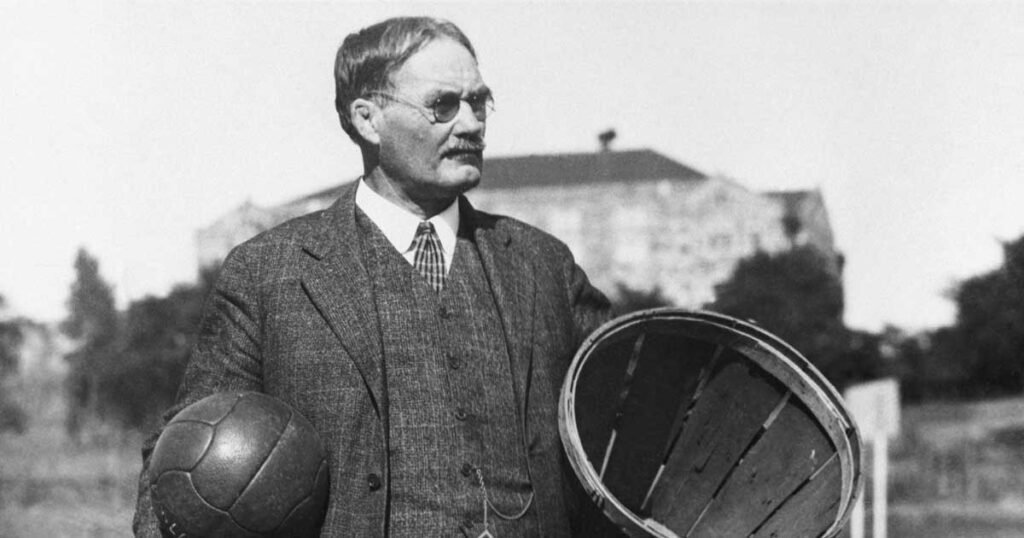
On November 6, 1861, in the small town of Almonte, Ontario, a boy was born who would change global sports culture forever. Dr. James Naismith—a polymath who became a chaplain, physician, educator, and sports pioneer—did not merely invent a game; he engineered a worldwide phenomenon that today connects hundreds of millions of players and fans across every continent.
The Ingenious Problem Behind the Invention
In the harsh, freezing December of 1891, Naismith was a 30-year-old physical education instructor at the International YMCA Training School (now Springfield College) in Springfield, Massachusetts. Tasked by department head Luther Gulick with a formidable challenge, Naismith was asked to create an indoor game to keep energetic young men active and disciplined during New England’s long winters.
The game needed to fulfill strict requirements:
- It had to fit within the confines of a modest indoor gymnasium.
- It needed to minimize physical contact and roughness to prevent injuries on hard floorboards.
- It had to be easy to learn yet challenging to master.
Drawing inspiration from a childhood playground game called “Duck on a Rock”—where players threw small stones to knock a larger stone off a boulder using a soft, arced trajectory—Naismith realized that placing the goal high off the ground would favor skill, touch, and strategy over brute force.
Peach Baskets and 13 Simple Rules
On December 21, 1891, Naismith nailed two peach baskets to the balcony railing of the Springfield YMCA gymnasium—exactly 10 feet off the floor—and typed out 13 basic rules on a single page.
┌─────────────────────────────────────────────────────────────┐
│                    THE ORIGINAL 13 RULES                    │
├─────────────────────────────────────────────────────────────┤
│  1. Ball thrown in any direction with one or both hands.   │
│  2. Ball batted in any direction (never with a fist).       │
│  3. Players cannot run while holding the ball.              │
│  4. Ball must be held in or between hands only.             │
│  5. No shouldering, holding, pushing, or tripping.          │
│  6. Striking the ball with fist counts as a foul.           │
│  7. Three consecutive fouls by a team grants a goal.        │
│  8. Goal scored when ball is thrown/batted into basket.     │
│  9. Out-of-bounds ball thrown in by first player touching. │
│ 10. Umpire judges players and calls fouls.                  │
│ 11. Referee judges ball, in-bounds, time, and score.        │
│ 12. Game played in two 15-minute halves with 5 min rest.    │
│ 13. Side scoring most goals in that time wins.              │
└─────────────────────────────────────────────────────────────┘
The first game featured 18 players using a soccer ball. Every time a point was scored, play was paused so a janitor could climb a stepladder to retrieve the ball from the peach basket. When students suggested naming the sport “Naismith Ball,” Naismith humbly declined, choosing instead the simple, descriptive name: “Basket Ball”.
A Multifaceted Legacy
While basketball is his most famous contribution, Naismith’s achievements extended far beyond the hardcourt:
“The invention of basketball was not an accident. It was developed to meet a need.”
— Dr. James Naismith
- Medical & Educational Pioneer: Naismith earned a medical degree (M.D.) from Gross Medical College in Denver, emphasizing the holistic integration of physical fitness, mental discipline, and character building.
- Innovator in American Football: Naismith is credited with inventing the first protective football helmet, crafting a hard leather headpiece to guard against head injuries while playing at Springfield.
- Founder of Kansas Basketball: In 1898, Naismith joined the University of Kansas as chaplain, physical education instructor, and its first basketball coach. Irony marked his coaching record—he remains the only coach in Jayhawks history with a overall losing record (55–60), yet he laid the foundation for one of the most storied traditions in college sports.
- Global Ambassador: Naismith lived long enough to witness his game reach the highest international stage. At the 1936 Berlin Games, where basketball debuted as an official Olympic sport, Naismith threw the tip-off for the first match and handed out the Olympic medals.
The Naismith Impact Today
From 13 rules on a sheet of paper to a global sport played in over 200 countries, Naismith’s creation has transcended athletics to become a pillar of global culture. The Naismith Memorial Basketball Hall of Fame in Springfield, Massachusetts, stands as a testament to his vision, honoring the finest players, coaches, and contributors in the history of the sport.
Dr. James Naismith envisioned a simple game to foster teamwork, health, and sportsmanship. Today, every time a ball swishes through a nylon net, his legacy carries on.



Responses